
News archive | Original event: November 9, 2026. Article prepared November 17, 2026.
The Federal Aviation Administration announced on November 9, 2026, that it had authorized Skyways to conduct a first-of-its-kind long-range drone operation from the Louisiana coast to offshore infrastructure in the Gulf. The decision is a milestone for commercial aviation—but it does not mean everyday drone pilots can now fly beyond visual line of sight without permission.

What the FAA authorized
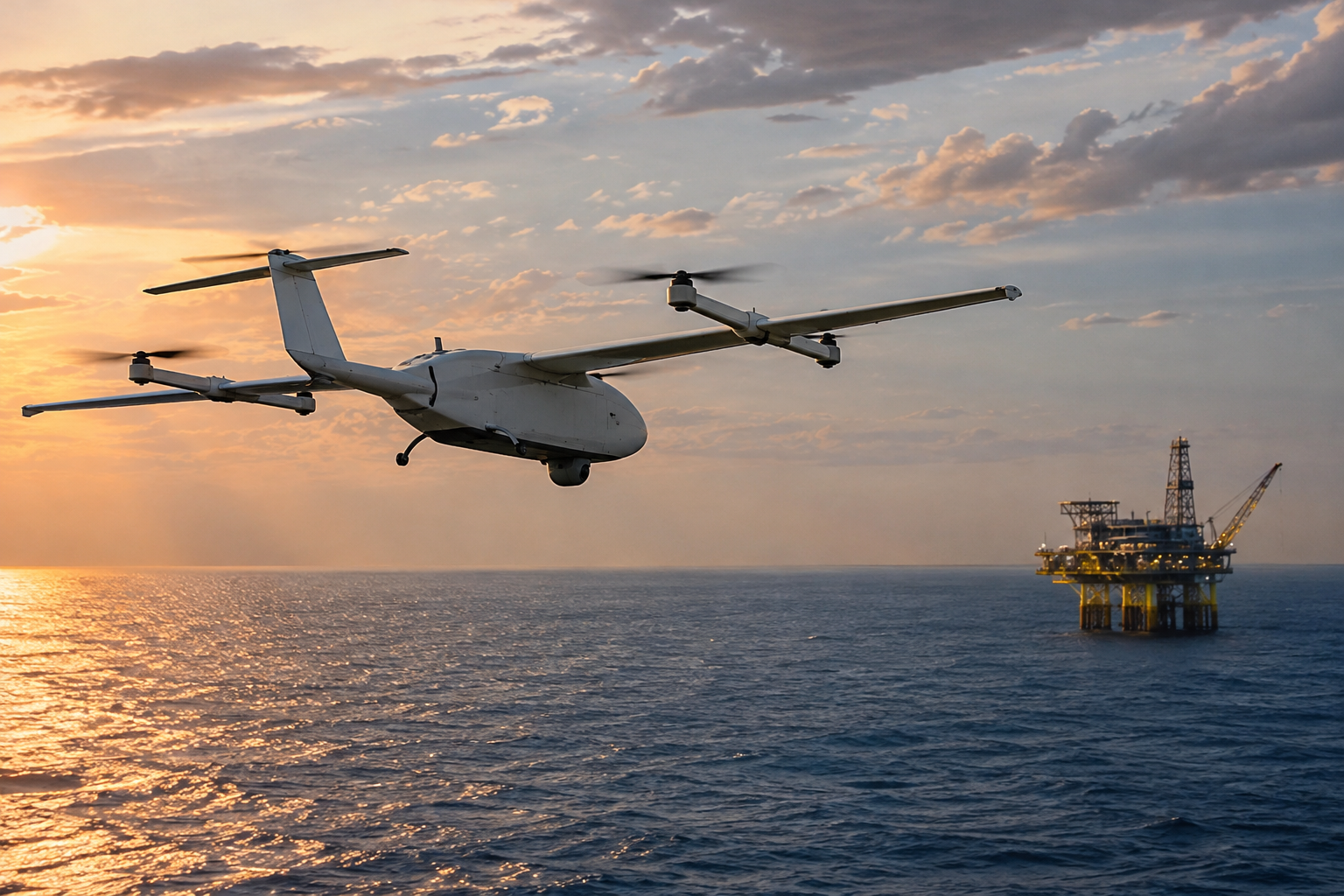
Skyways received authorization for its autonomous V2 vertical-takeoff-and-landing aircraft to travel from a Shell Pipeline Company facility in Gibson, Louisiana, to a platform offshore. The planned operation combines inspection of a pipeline right-of-way with a simulated equipment delivery. The FAA used authority under Section 927 of the FAA Reauthorization Act of 2024 to grant a waiver for this specific operation.
Why long-range drone operations matter
Conventional small-drone flights typically require a pilot or visual observer to maintain visual line of sight. Offshore infrastructure can be far from shore, making traditional inspection expensive and time-consuming. Long-range aircraft could eventually support inspection, equipment transport, emergency response and other missions when approved safety systems are in place.
Skyways says its V2 uses electric power for vertical takeoff and landing and a fuel-powered cruise engine for extended range. The proposed Shell flight is a demonstration, not proof that routine offshore drone deliveries are already operating under this authorization.
What it means for Arkansas
Arkansas has energy infrastructure, agricultural operations, waterways and remote industrial facilities that could benefit from longer-range inspection technology. This FAA action may help inform future operations, but it does not create an Arkansas-wide exemption or change the rules for a typical local pilot.
For most Arkansas drone photographers and commercial operators, applicable FAA requirements still include airspace authorization when needed, registration and Remote ID rules, and the limitations of Part 107 unless a specific approval applies. Review our Arkansas drone flying resources and Part 107 certification guide.
Bottom line
This is an important example of the FAA permitting a carefully evaluated advanced drone mission. It is not a general authorization for all drone operators to fly out of sight. Future expansion will depend on regulations, technical safeguards and case-specific approvals.
Sources: FAA announcement, November 9, 2026; Skyways announcement.