
Originally reported or enacted as dated below. This explainer was prepared November 17, 2026.
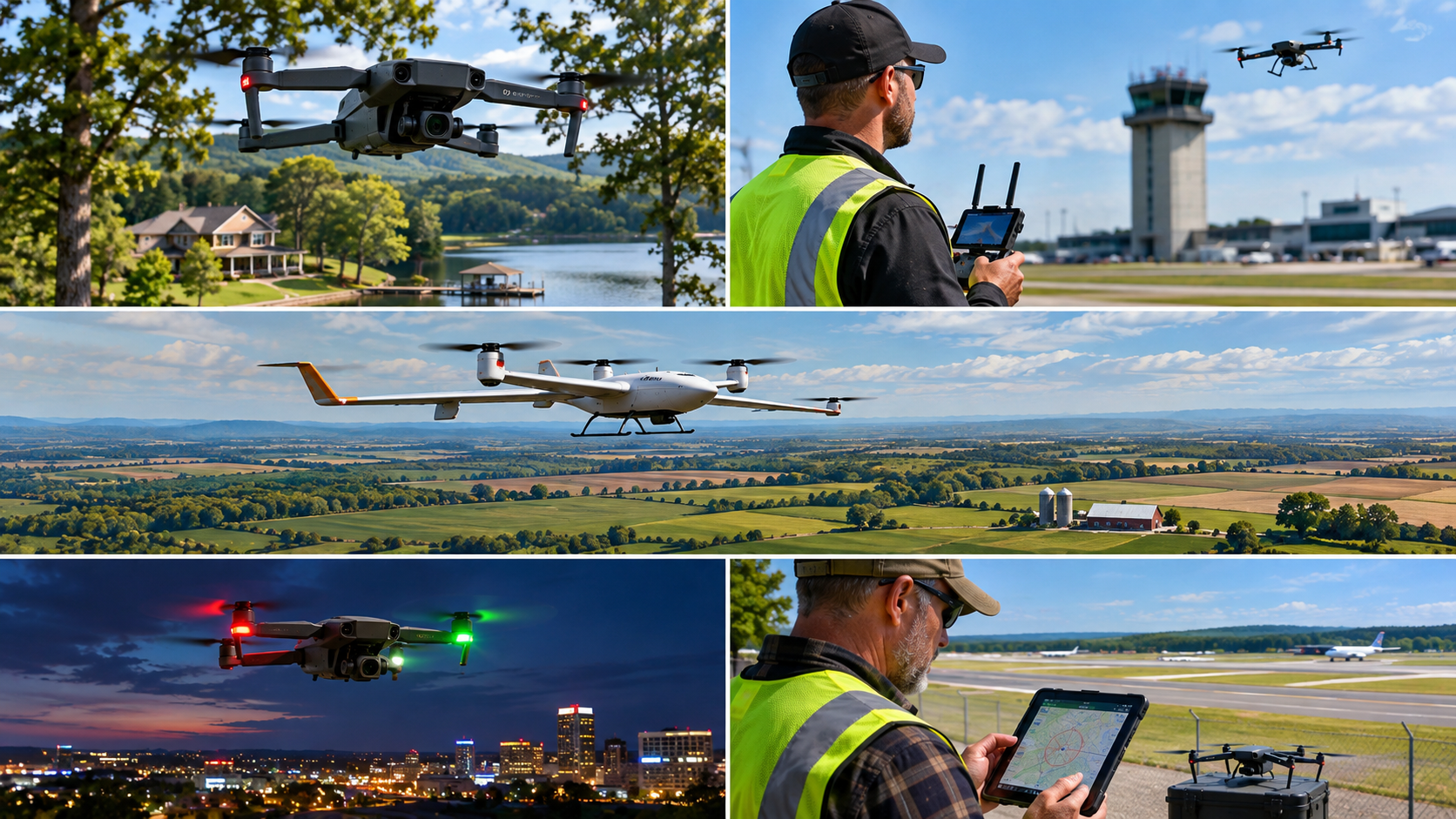
Night drone photography can capture Arkansas skylines, holiday displays and landscapes after dark. But flying legally requires more than switching on the aircraft’s built-in lights. This is a guide to existing FAA requirements, not an announcement of a new 2026 law.
Can a Part 107 pilot fly at night without a waiver?
Yes, routine night operations are allowed without a night-specific waiver when the pilot meets the applicable FAA training and operational requirements. The aircraft must have anti-collision lighting visible for at least three statute miles, with a flash rate sufficient to avoid collision.
Training and authorization
Part 107 remote pilots must have the required initial knowledge or recurrent training covering night operations. If the flight is in controlled airspace requiring authorization, night flight permission does not replace that separate airspace approval.
Night flight safety in Arkansas
- Survey the area in daylight for wires, trees and obstacles.
- Check weather, visibility and airspace restrictions.
- Confirm lighting meets the FAA requirement; decorative LEDs alone may not.
- Keep the drone within applicable visual-line-of-sight limits.
- Have a plan for lost signal, battery limitations and emergency landing.
See our Arkansas flying resources for links to current FAA guidance.
Official source: FAA Part 107 airspace authorizations and night operations.
Featured image is an AI-generated editorial illustration, not a documentary photograph.